Batman’s Confrontation with the Mutant Leader
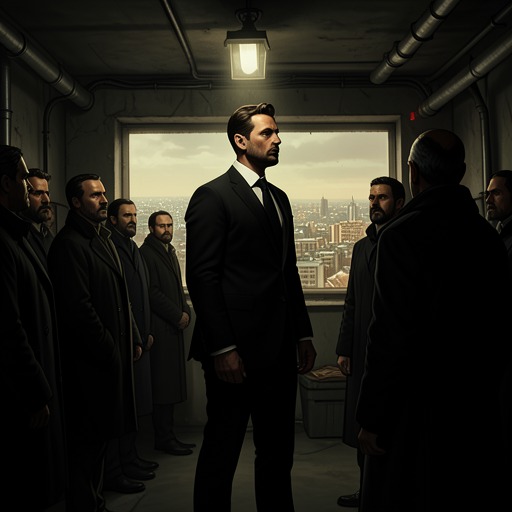
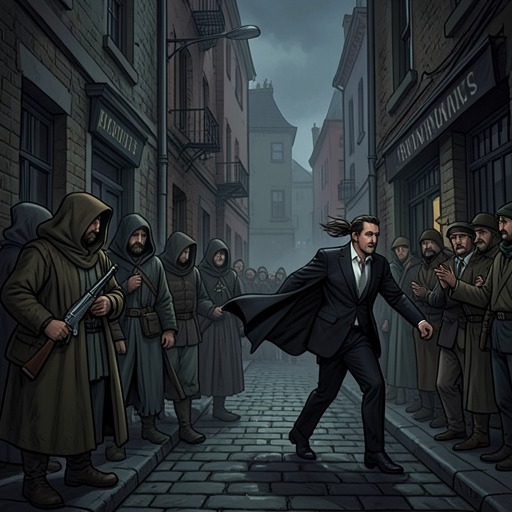
Batman the Dark Knight Returns 10th Anniversary Edition HardcoverBatman’s Confrontation with the Mutant Leader is the turning point of Batman’s Return. It places the aging Bruce Wayne / Batman directly against the figure who embodies the Mutant gang’s strength, brutality, and claim to rule Gotham City. Batman does not win through youthful superiority or overwhelming force. He wins by changing the conditions of the fight, surviving punishment that should have ended his campaign, and making the leader’s defeat public enough to fracture the gang’s authority.
Causes and Background
Gotham City’s social decay has created the conditions for the Mutant gang’s rise. The gang operates as a parallel power in the streets, using numbers, intimidation, and violence where the exhausted civic order can no longer guarantee safety. Its leader is more than an individual criminal: he is the concentrated image of a generation of disorder, a body and voice through which the gang presents itself as stronger than the police, the government, and the returned Batman.
Batman’s decision to confront him follows Batman’s Return and the Mutant Gang Uprising. Bruce Wayne has spent years in retirement, but the city’s worsening violence turns retirement into a moral and psychological failure. The confrontation therefore carries two stakes at once. Batman must stop the immediate threat posed by the gang, while Bruce must discover whether the old identity can still function in a city that has grown accustomed to his absence. The Mutant leader’s challenge gives that question a concrete form: Batman’s legend must meet the gang’s living power in direct combat.
The First Confrontation
The initial encounter demonstrates the danger of the Mutant leader rather than resolving it. Batman enters the conflict with experience, equipment, and the authority of the Bat-symbol, but age and accumulated physical decline limit the effectiveness of a straightforward assault. The leader’s strength and ferocity expose the cost of Batman’s years away from action. Batman is beaten badly enough that the encounter becomes a defeat in immediate tactical terms, yet it also supplies the knowledge needed for a second attempt.
That first failure changes Batman’s method. Instead of treating the leader as an opponent who can be overcome by force alone, Batman studies the circumstances in which the leader’s power is greatest and identifies conditions that can reduce it. The battle thus becomes an exercise in adaptation. Batman’s return is validated not by an effortless triumph but by his refusal to interpret injury as final defeat; his damaged body becomes evidence of vulnerability, while his continued planning preserves the possibility of victory.
The Decisive Battle
The rematch is staged in conditions more favorable to Batman, particularly in the mud, where the Mutant leader’s physical advantage is diminished. Batman uses the environment to slow and destabilize an opponent who depends on speed, mass, and the terror produced by close-range violence. The fight remains brutal, and Batman is pushed to the edge of exhaustion, but its logic is no longer the leader’s alone. Batman turns the setting into a weapon and makes endurance and timing matter as much as raw strength.
The leader’s defeat is consequently both physical and political. Batman does not simply overpower the head of a gang; he disproves the image of invulnerability on which the gang’s rule depends. Once the leader is beaten, the Mutants’ claim to inevitable dominance is weakened. The confrontation makes visible a principle that will recur throughout Batman’s campaign: a system organized around fear can be challenged when its central symbol of power is made vulnerable before witnesses.
Consequences and Aftermath
The battle contributes directly to the collapse of Mutant gang rule of Gotham. The gang does not disappear merely because its leader loses, but its command structure is destabilized, and the defeated leader becomes available for arrest rather than continued street rule. Batman’s victory also alters how other actors understand him. The police, the public, and the gang members themselves are forced to account for the fact that the retired Batman has returned as an active power.
The aftermath expands the confrontation beyond a private feud. Batman’s actions help create the conditions for broader collective mobilization in Gotham City. Later events involving the Gotham City Police Department, the city’s civilians, and the Sons of Batman show that the struggle over order is not settled by one duel; it is transferred from the gang’s coercive rule to competing forms of authority. Batman’s victory supplies the initiating example and the organizing myth, while the continuing crisis raises questions about whether order restored through Batman’s influence will remain dependent on personal force.
Narrative and Thematic Significance
The confrontation compresses the central tension of The Dark Knight Returns into a single reversal. Bruce Wayne’s body appears to testify that the past cannot simply be recovered, yet Batman’s intelligence turns bodily limitation into tactical knowledge. The Mutant leader represents undirected collective violence; Batman represents disciplined violence aimed at reclaiming a public space. Their opposition is therefore not a simple contest between good and evil in abstract terms, but a struggle over who can define strength when institutions have failed.
The event also establishes the recurring pattern of Batman’s later conflicts. He confronts a stronger or more politically protected opponent, accepts that conventional authority will not solve the crisis, and uses preparation, symbolism, and controlled escalation to change the balance. The victory is inspiring because it restores agency to Gotham, but it is unsettling for the same reason: the city’s recovery begins through an unauthorized figure whose personal charisma and capacity for violence substitute for formal legitimacy. Batman’s defeat of the Mutant leader is thus the heroic proof of his return and the first warning that the new order will inherit the coercive energy of the old one.